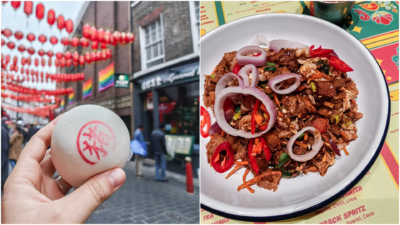
I won’t be revealing a secret if I say British food doesn’t exactly have a stellar reputation in the world. Over my last two trips, I made it my mission to seek out the best British food in London, and let me tell you: I don’t buy it. I don’t believe any cuisine can be reduced to meh, I don’t like it. No one cuisine is entirely bad, bland or uninspiring. And if one believes so, it tells me there’s a lack of knowledge and real desire to explore.
London, hands down, is my favorite culinary destination, an ever-evolving playground for people who love food. You can find anything and everything your heart desires in this city: from incredible Sri Lankan jaggery beef curry to a creme brûlée donut to authentic cacio e pepe pasta.
However, I decided it was crucial to understand local cuisine on my first (and second) trip to London. I made a big list of traditional British foods and researched the hell out of London restaurants that serve them.
I won’t claim I know British cuisine intimately or that I’ll advise you like a local (for that check out my posts about Germany and Sri Lanka). But I’ll tell you this: I am thorough, I only write about places I actually tried myself, and I’ll tell you my opinion like it is.


This is not a complete list of British food in London. I hope to explore more on my next trip. This is a good starting place, though. I mention the dishes I didn’t get to try and where I would try them. Maybe you have a bit more time to cover those, too.
I spend hours doing research and writing my guides. If use my tips, do leave a comment below! It makes me so happy to know my blog was useful.
And if you would like to further support my work, consider booking your hotel or attraction tickets (in London or anywhere else in the world) by clicking on my affiliate links. This way I will earn a small commission at absolutely NO extra cost to you.
Disclosure: this post contains affiliate links which means if you buy something by clicking the link I will earn a small commission at absolutely no extra cost to you.
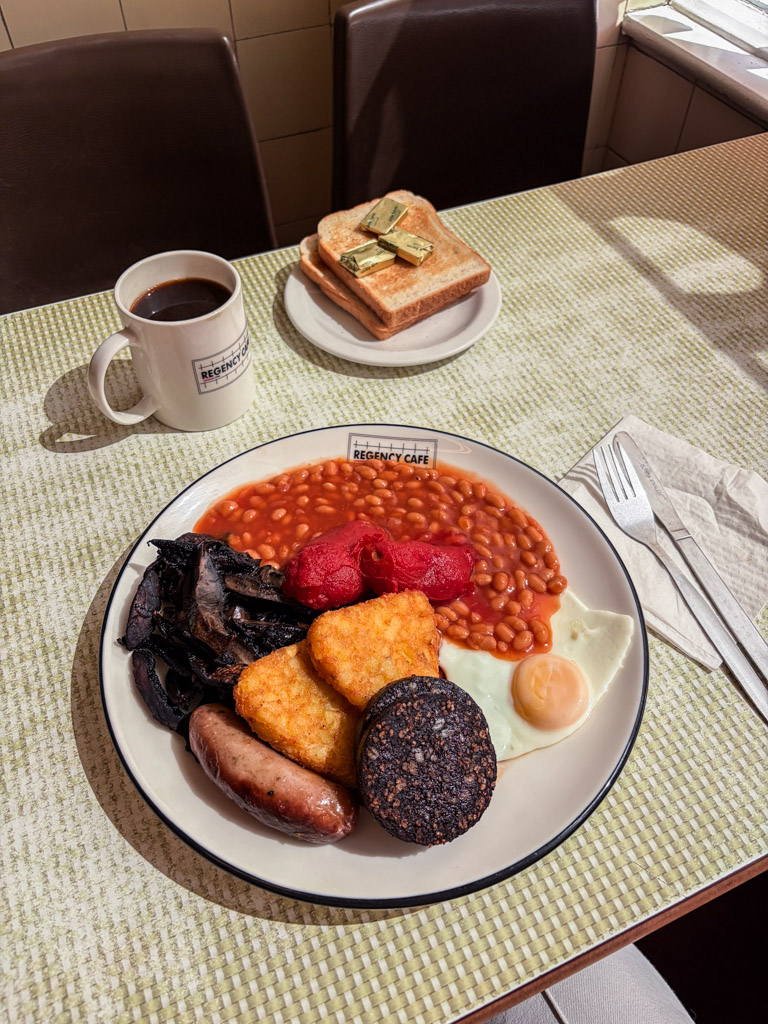
The only English breakfast I’d ever had before stepping foot in London was at Sri Lankan hotels (if you are new here: my husband is Sri Lankan and we spend a lot of time there). English breakfast in Sri Lanka is a pale, poor cousin of the real thing. It basically means you would rather have eggs than rice for breakfast. The eggs come with beans and tomatoes, at best.
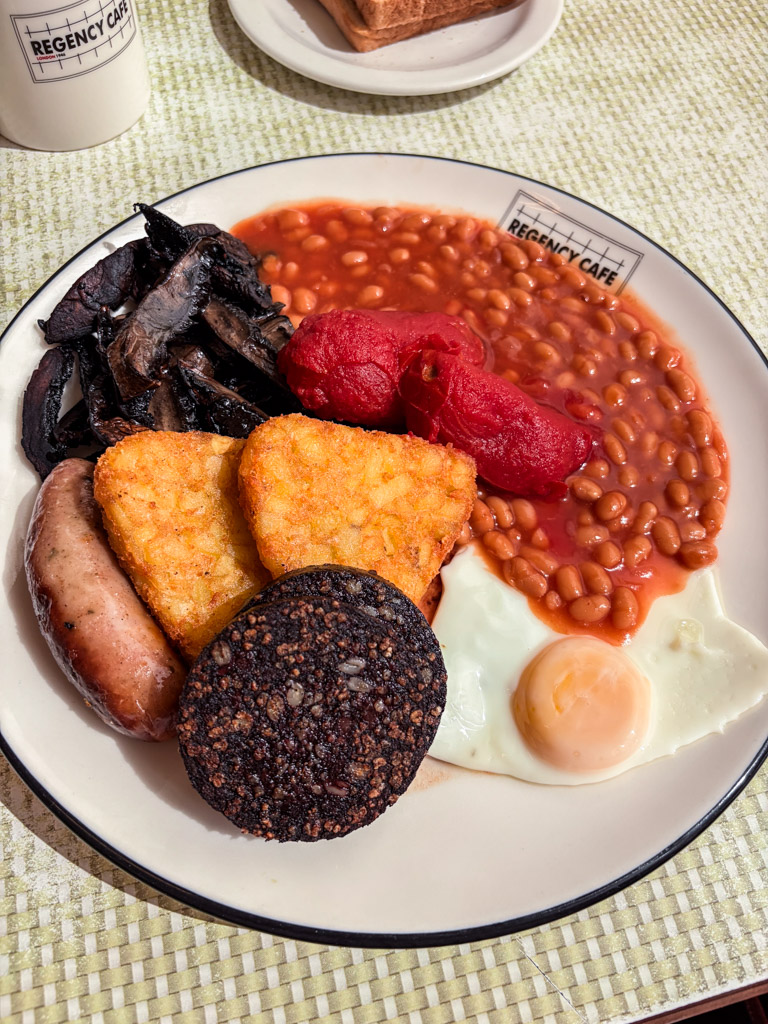
Enter: my first experience trying the real fry-up in London. Served piping hot — this is not a figure of speech, I actually burned my palate — it included a fried runny egg, freshly made beans, tomatoes, hash browns, sausage, bacon, black pudding, mushrooms, and toast with butter. There might be other ingredients, too, depending on the place where you try it.
The eggs must be served runny: the warm yolk mixed with freshly cooked beans makes the most satisfying rich sauce. Tomatoes might be cut in half and grilled or come from a tin. Potatoes in various forms — hash browns, mashed or fried — are part of the deal, usually.
The black pudding — a blood sausage made of pork, beef blood, and grains — was new to me and I’ll say upfront I did not love it. Lest you think I can’t stomach something called blood sausage, behold the dish I grew up with: kholodets. My mom describes the ingredients for kholodets as “ears, nose, and tits; throats, tails, and private bits”, meaning every undesirable part of an animal goes into it. But we digress.
Bacon used for English breakfast is different than the bacon you might be used to. It’s called back bacon and is cut from the loin rather than the belly. It’s meaty, lean, and juicy when cooked, rather than fatty and crisp.
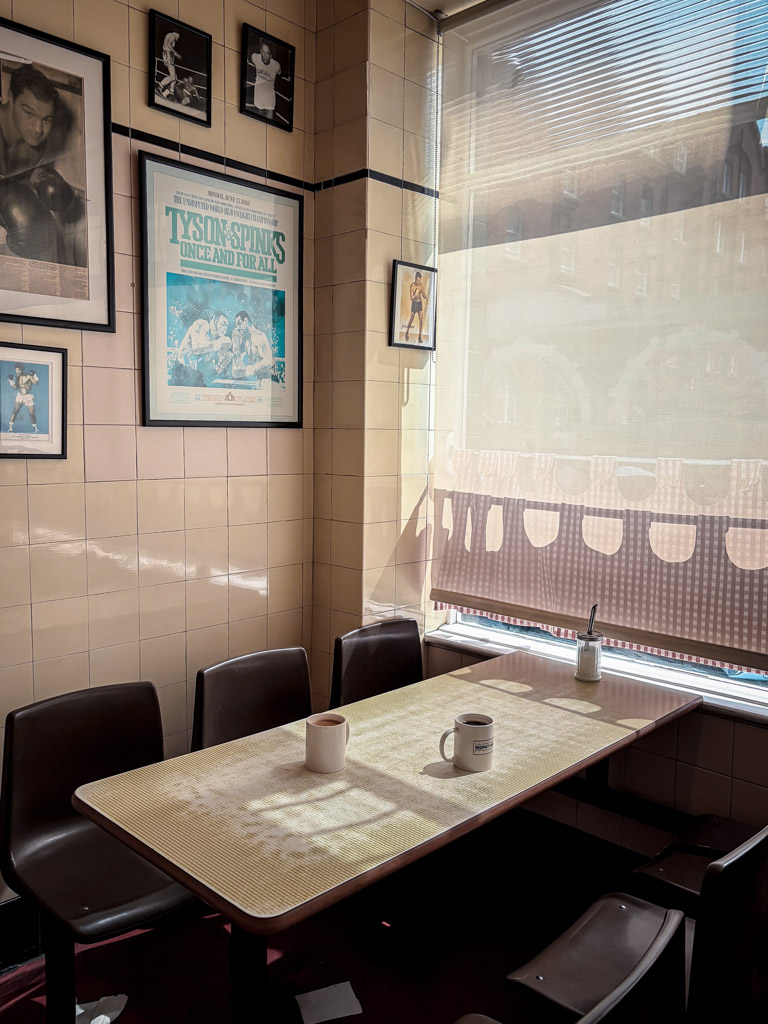
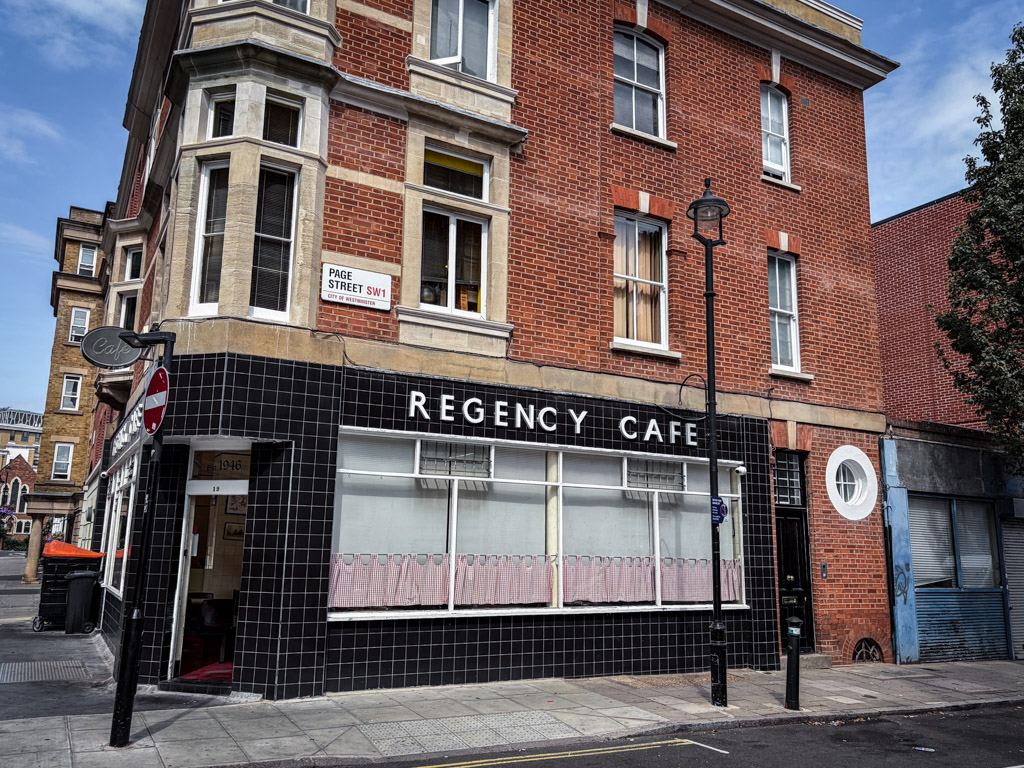
Pretty much every list of British foods to try in London will recommend you go to Regency Cafe for a full English. It opened on Regency Street in 1946. Many details of the original art-deco design are still there: the tiled walls, the posters and signed photographs of famous sportsmen.
It’s an unpretentious place with friendly staff who make you feel welcome and taken care of. Now, when it comes to food, I can see how English breakfast could become a craving. It’s rich and heavy. And there are so many things on your plate it feels luxurious while being down-to-earth in its nature.
I absolutely loved the egg, freshly-baked beans, warm tomatoes (even though they come from a tin). The hash browns were pure perfection: golden and extra crispy.
I did not love the black pudding which tasted plain and mealy. I would definitely give it another try, because I am not convinced I don’t like it as a species.
Lastly, the sausage was a letdown, sadly. I would skip it next time. And there definitely will be a next time, because Regency Café is simply lovely.
There might be a line of people outside, according to reviews. I came here around 2 pm on a weekday and was able to get food within 10 minutes. You order at the counter, then find yourself a table, not the other way around. Lastly, the location of Regency Café is unbeatable. You can have breakfast here then reach Tate within 10 minutes on foot. Westminster Abbey is 12 minutes away.
Regency Cafe — 17-19 Regency Street

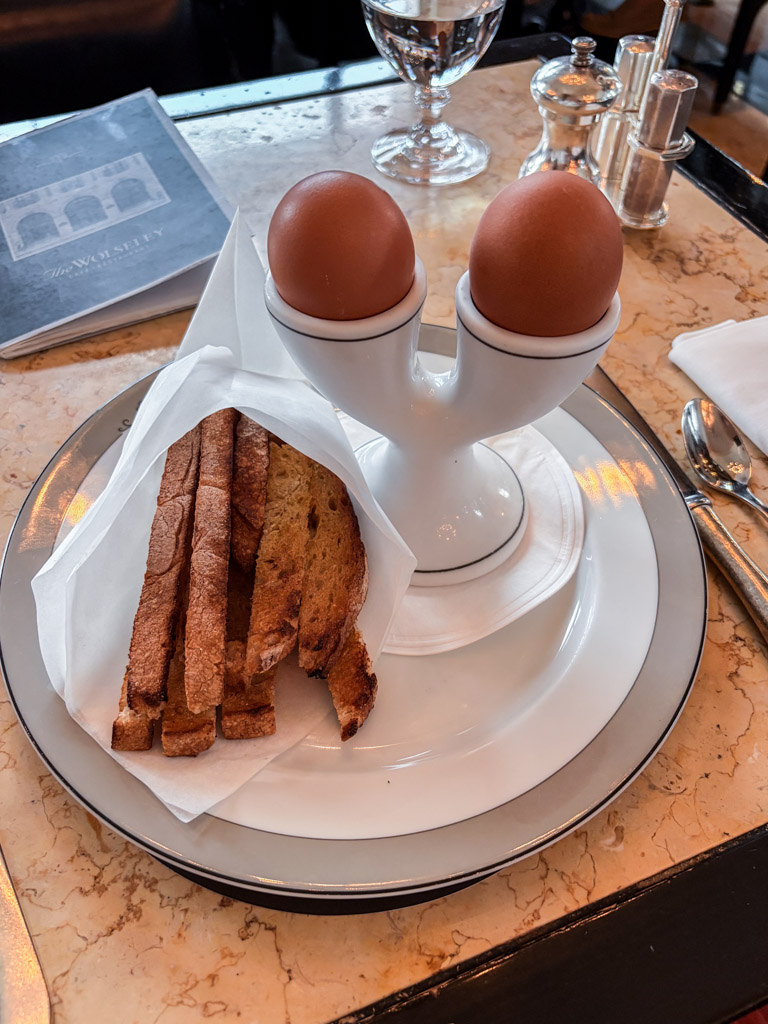
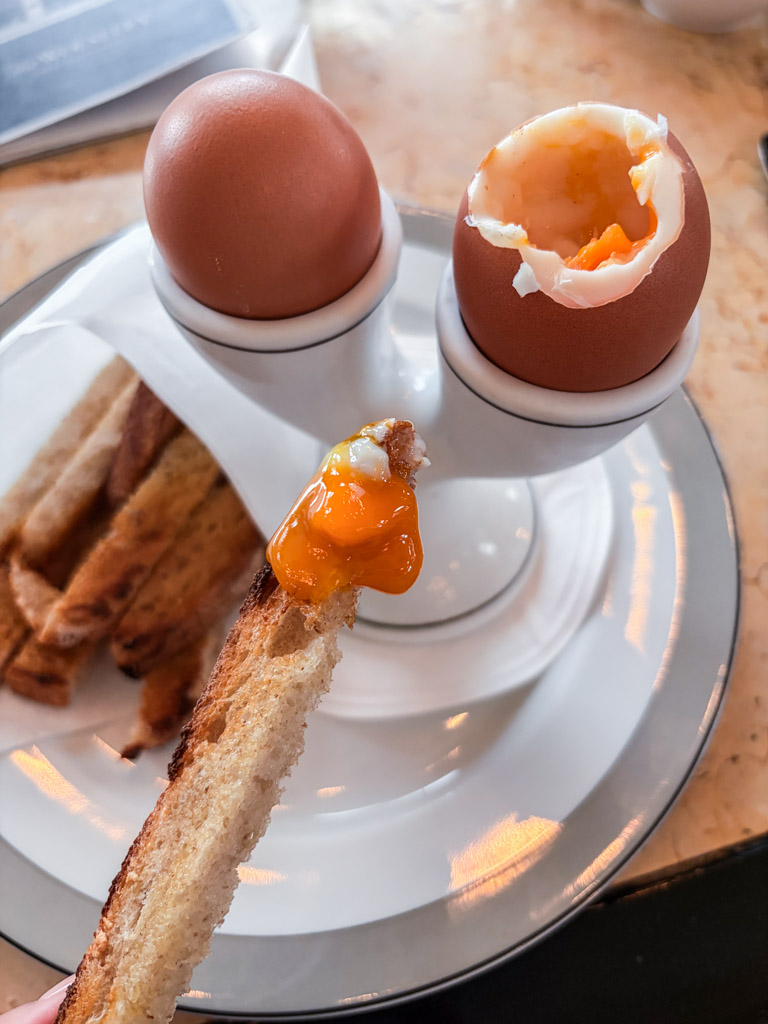
Soft-boiled eggs and soldiers is the easiest of breakfasts I am obsessed with after my trip to London. The bread is fried in copious amounts of butter to achieve a crispy exterior, the eggs are warm and runny. It’s so simple, you wonder how on Earth you never thought of making it at home.
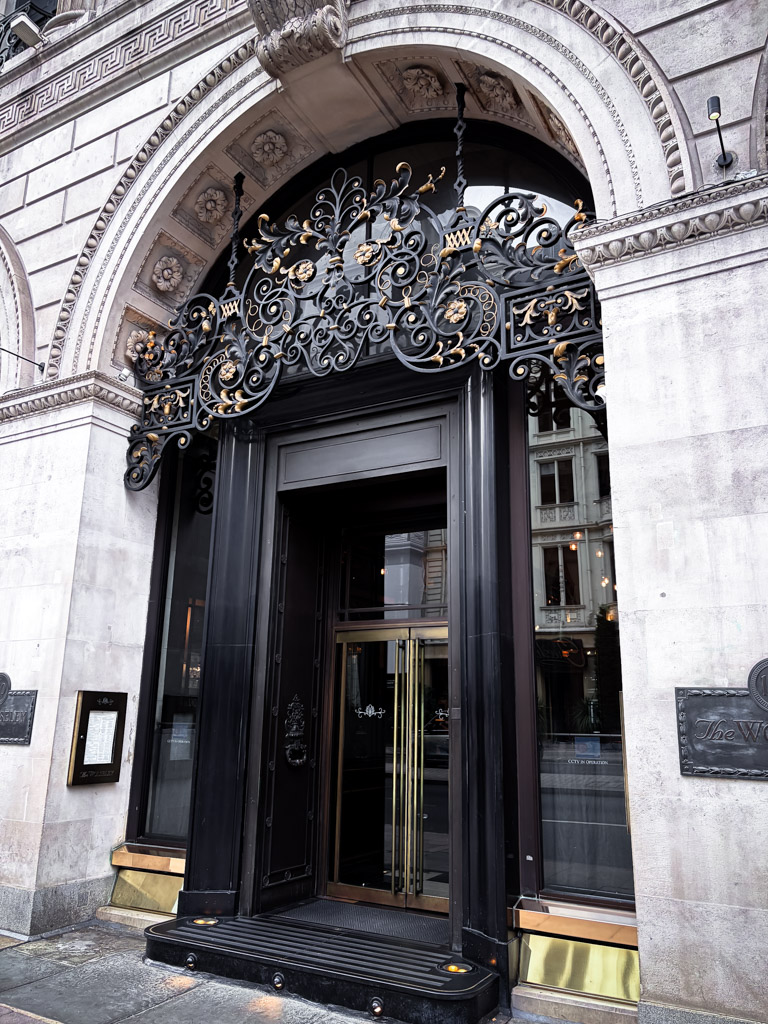
A London institution, The Wolseley is located in a building with over a hundred years of history. It served as a car dealership and a bank at some point, until the restaurant was opened here in 2003.
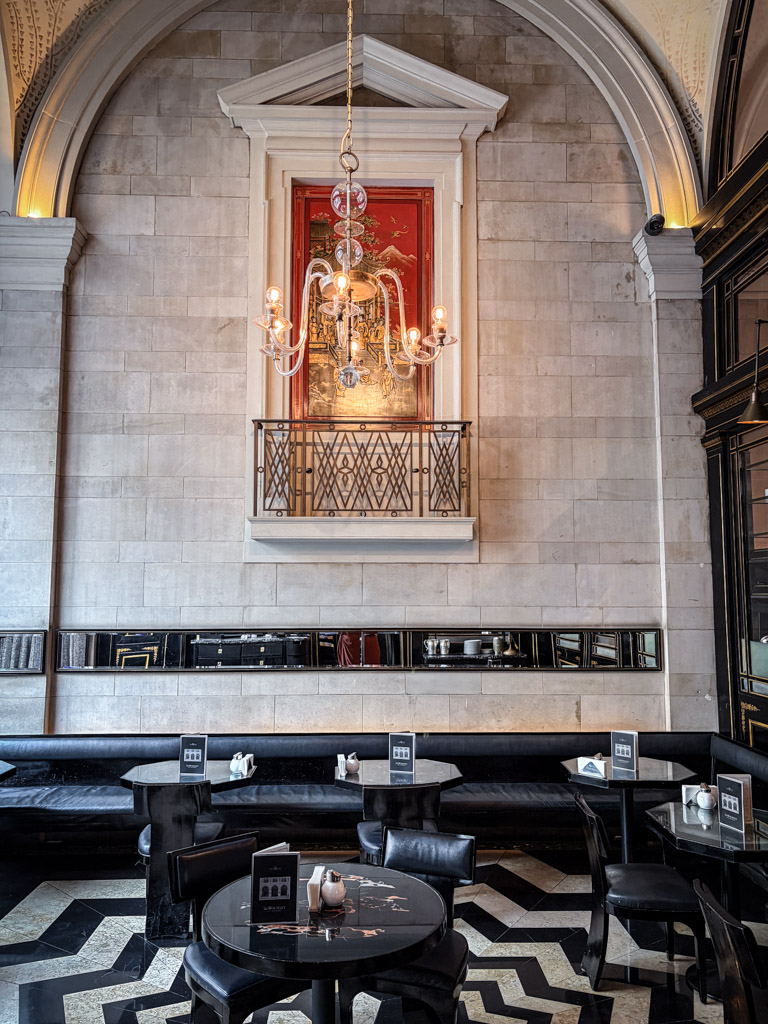
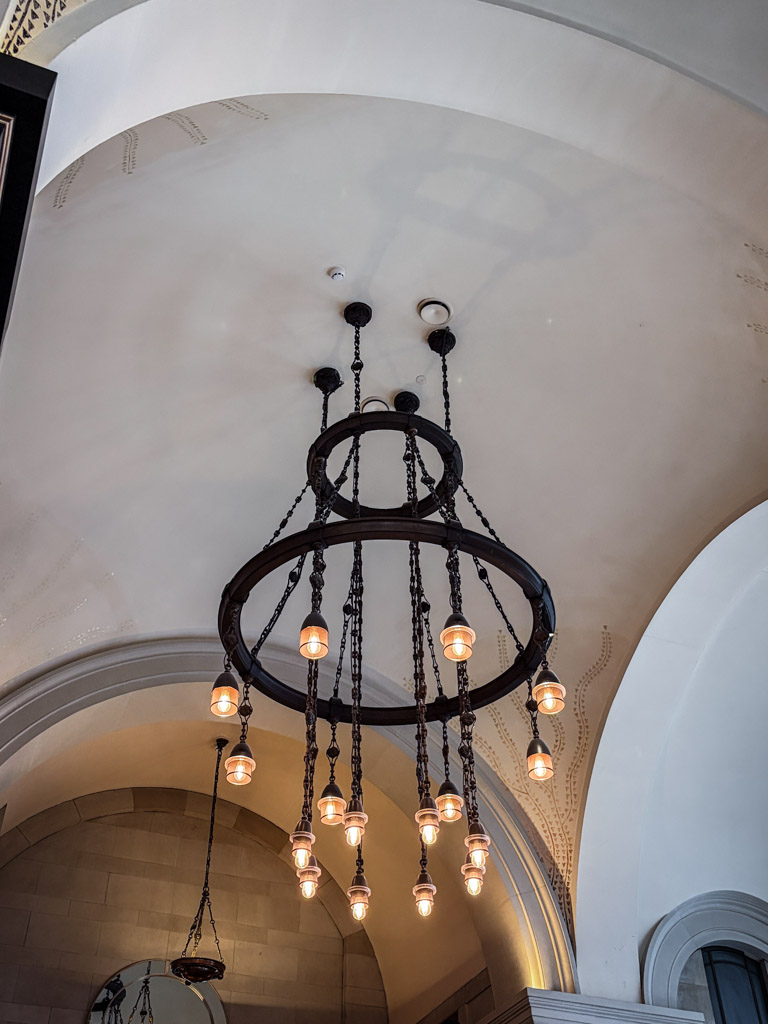
The interior is made in Art-Deco style and described on the official website as “rooted in the tradition of Europe’s grand café culture.” It is truly such a gorgeous space, a meal here feels special. The eggs and soldiers are made beautifully, no notes. The eggs are served on the cutest stand that reminded me of a candleholder.
At £10.50, 2 eggs and soldiers is one of the most affordable positions on the menu, so you get to experience the beautiful interior and impeccable service while not spending a fortune.
Do make a reservation. The location of the place is superb, right on Piccadilly, steps away from Fortnum and Mason. Buckingham Palace is 10 minutes away on foot, Trafalgar Square is 15 minutes away. There’s a second location in the City, but I haven’t tried it.
The Wolseley Piccadilly — 160 Piccadilly


A sausage roll is a traditional British snack made of puff pastry wrapped around sausage meat. I was caught off guard to find a big chunk of meat inside the pastry whereas what I expected was a sausage in a casing (not unlike in a hot dog). The meat is usually pork, spiced with pepper, coriander, sage, thyme, and oregano, among other spices.
The Ginger Pig is a butchery with 9 locations in London. They work with selected small farms around the UK, making sure the quality of meat is always at the top, and hire skillful butchers who manage the whole process “from mincing and mixing to curing and cold-smoking.”
According to their official website, the sausage roll was born by chance, “a way of putting unsold meat to good use”, but has turned into an iconic British food in London with a cult following. This sausage roll was the first recommendation my friend Keshi gave me upon my arrival to London.
You can taste the top quality of ingredients: incredible meat, flaky puff pastry made with real butter. The rolls are made fresh 6 days a week. While I list it under “snacks”, the sausage roll from the Ginger Pig is really big and can easily be a meal on its own.
The Ginger Pig — multiple locations in the city. Check Google Maps to find one close to you.
Cornish in the name of this popular British snack refers to the county of Cornwall, where it comes from. And pasty is in fact spelled pasty, I didn’t lose an “r” there.
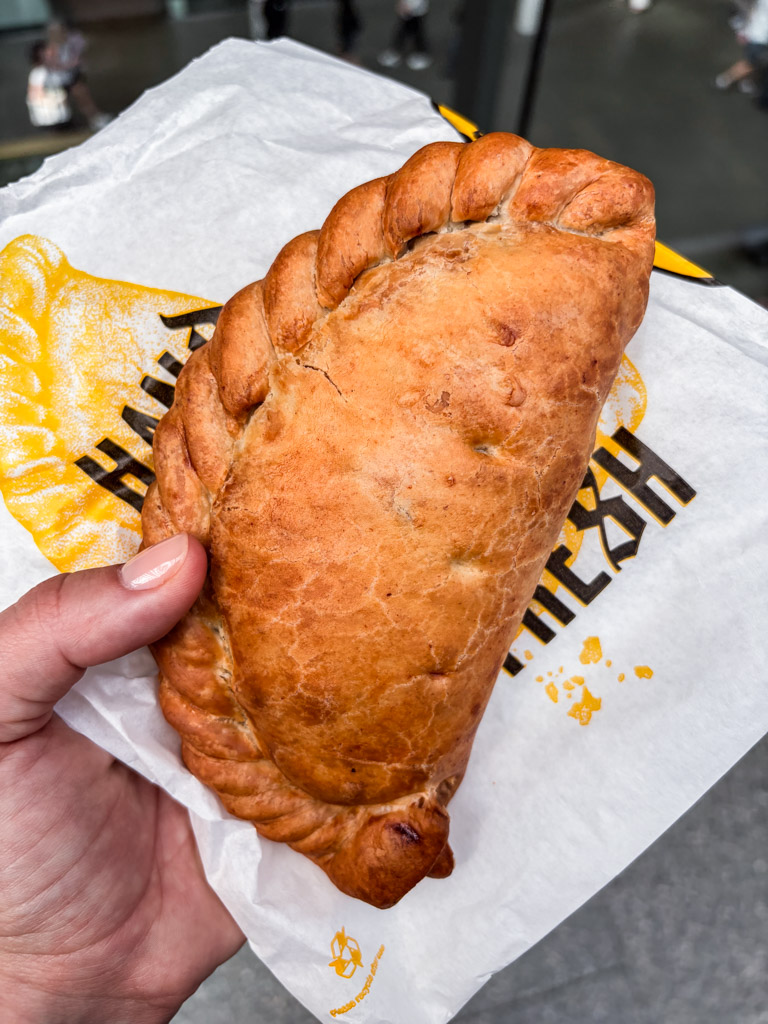
A traditional Cornish pasty is a hand-held pie made with a savory filling of meat and vegetables. Its signature is a hand-crimped edge. The pasty has a Protected Geographical Indication status, meaning it can only be made in Cornwall to be named a Cornish pasty. Which means you can’t get it at any which place, but I’ll tell you exactly where to go in a second.
The legend has it miners in Cornwall had pasties for lunch, as the pies were easy to pack and take underground. Besides, stuffed to the brim with beef, potatoes, and swede (rutabaga) it was a filling meal.
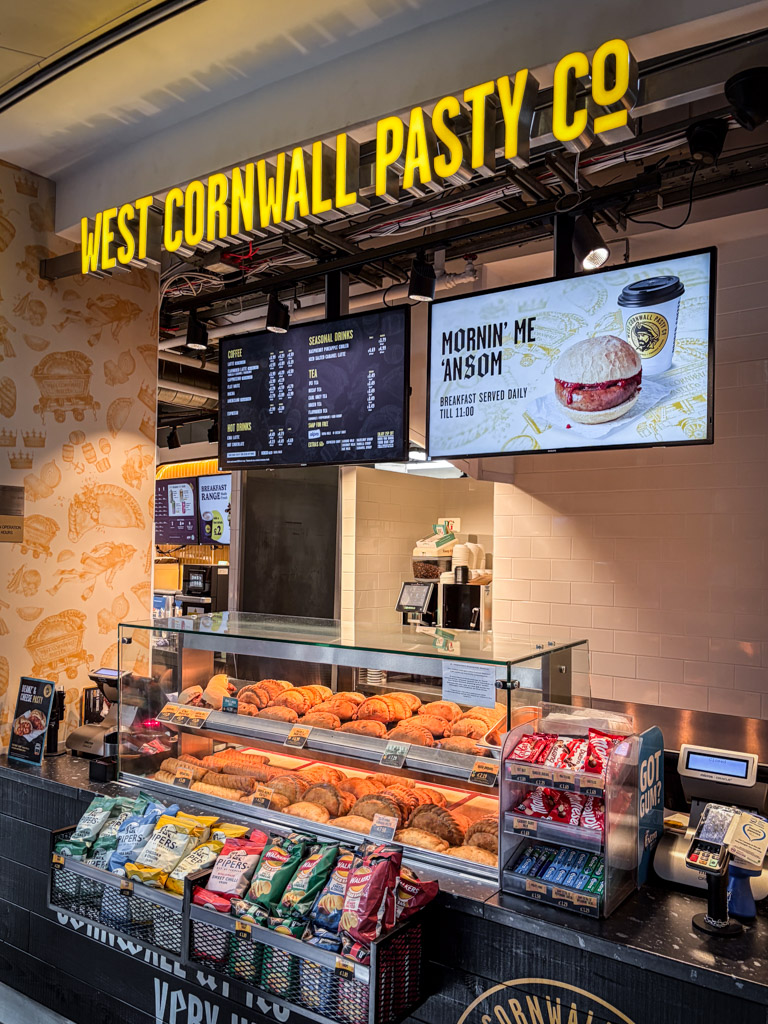
There are two major brands that sell Cornish pasty in London: West Cornwall Pasty Company and the Pasty Shop. Both have multiple locations in the city, with one or another present at every major train station. I tried mine at the West Cornwall Pasty Company at King’s Cross station.
While there are multiple fillings to choose from, like spicy chili beef and chicken or bacon and leek, their most popular item is the traditional Cornish pasty made with steak, Cornish potatoes, and rutabaga.
As you bite into the shortcrust, steam comes out. The filling is extremely generous, so deliciously hot and buttery. I wish it was a bit spicier, but we are talking about traditional British food in London, right? At almost 800 calories per pie, this can be a proper meal, not just a snack.
West Cornwall Pasty Company — multiple locations in the city. Check Google Maps to find one close to you.

Finally, a snack that doesn’t constitute a whole meal. Scotch egg is a soft-boiled egg (usually, an 8-minute egg, to be precise), wrapped in sausage meat, coated in bread crumbs and deep-fried.
It is often sold at pubs across Britain as an appetizer or at markets as a snack one could eat on the go or pack for a picnic. I tried mine at a little farmer’s market in Clapham Common (it was in fact the very first British food in London I tried upon arrival). Here are some thoughts.
Runny egg — yes, please! Sausage — give me more! Breaded and deep-fried — everybody loves that! But why is it served cold? Literally every part of this snack would be best warm. Eggs are best warm, sausage is best warm, deep-fried foods are at their most delicious when warm. But Scotch egg is often served at room temperature or cold.
The whole time I was chewing, I kept thinking I would enjoy it so much better, if it was warm. You can find a warm version at pubs, which is what I am going to do next time I am in London.
I don’t have one specific place to send you to, because I haven’t yet found my favorite version of the Scotch egg. My first choice would be a traditional British pub, where you have a chance of trying the Scotch egg warm.
I have seen it sold at Borough Market. And, as Fortnum & Mason claims to have invented the Scotch egg in 1738, I would try their version too.


The one British dish that needs no introduction is fish and chips. You have probably tried it even if you never stepped foot in Britain. The golden, crispy, battered and deep-fried fish is served with French fries (chips in British English) that are chunkier than their American counterpart. The fish is usually cod or haddock, sometimes pollock.
Like many traditional British foods, fish and chips has ties to the working class. It has always been considered an inexpensive take out food. Inexpensive it is no more, at least not in London. But, interestingly, it is still a dish that most people would eat out at a local chippy, a restaurant that serves fish and chips exclusively, rather than prepare it at home.
Poppies is considered one the most iconic spots to try fish and chips in London. It was opened in 1952 and currently has 4 locations. For traditional fish and chips, you can choose between haddock (crispier) and cod (juicier). The fish comes with chips and an excellent homemade tartare sauce.
Poppies works with local producers to source their fresh fish and potatoes that are handled in their central kitchen and then delivered to restaurants on a daily basis.
Poppies — multiple locations in the city


Bangers and mash is yet another British classic that has been a staple among the working class for generations. Bangers is British for sausages. The name is believed to have originated in the early 20th century, when during the first World War butchers had to deal with meat shortages and fill up sausage casings with breadcrumbs and water. The sausages would pop on the pan, hence the name.
The sausages are made of pork, Cumberland sausage being one of the most popular choices. The mash is made with floury potatoes to achieve a creamy consistency. Onion gravy is a must, green peas and extra onions make a good addition.
I am sorry to disappoint, but I haven’t yet found a perfect plate of bangers and mash. The most popular spot is Mother Mash. I tried it, I wanted to love it, but I can’t wholeheartedly recommend it.
I loved how they brought the simple workers meal into the modern time with their make-it-your-own menu. You chose the type of mash (classic, cheesy, sweet potato), the type of main (sausage or pie, with multiple options for each), and the type of gravy (chicken, onion, veggie).
I went for traditional mash, two types of sausage (Cumberland and pork and chili, recommended by the waiter), and onion gravy. While I loved the mash, I can’t say the same about sausage. I live in Germany, so sausages are a staple of my diet (along with great bread, white asparagus seasonally, and Franzbrötchen because I am based in Hamburg).
I found the quality of meat in the sausages at Mother Mash rather low. Pork and chili one was the better of the two, in case you want to give it a try. I also haven’t tried their pies, so there’s reason to come back.
For bangers and mash, next time, I would try to find a place that works with a high quality butchery, a gastro pub, perhaps.
Mother Mash — 26 Ganton Street and 4 New Row, Covent Garden


If you are on the fence about trying British food in London, may I suggest you start with Sunday roast? I simply cannot see how one wouldn’t like expertly cooked meat with perfectly crisp roast potatoes and a rich gravy (choose the place wisely, of course).
While fish and chips has always been a dish eaten at restaurants, Sunday roast is a tradition that started at home. It was a meal enjoyed by the whole family after Sunday church service. Today, many pubs and restaurants will do the heavy lifting for you. All you need to do is arrive hungry. And I mean it. A proper Sunday roast requires a nap afterwards.
A Sunday roast must include the following: roast meat (beef is a classic, but pork, chicken, or game meat are all perfectly acceptable too), roast potatoes, gravy made with meat drippings, vegetables, and Yorkshire pudding. The latter is quite confusing, given that it does not look like a pudding at all, but like a pop-over. It is essentially batter cooked in extremely hot fat, usually beef drippings. The batter sizzles and rises over the edges of the pan, creating a savory pastry, golden and crispy on the outside, airy and soft on the inside. All-in-all perfect to soak up the gravy and all the juices from the meat.
The Jugged Hare is a gastropub with a focus on game meat, well-known for their great Sunday Roast. I tried the pork belly for my roast which had a perfect crackling on top. It seems to be currently off the menu, but there’s beef sirloin, leg of lamb, and chicken. The meat is served with potatoes roasted in duck fat, seasonal vegetables cooked just right (no mushy carrots) and a rich rotisserie gravy. My first Yorkshire pudding was definitely a surprise, but extremely enjoyable.
The Jugged Hare — 49 Chiswell Street
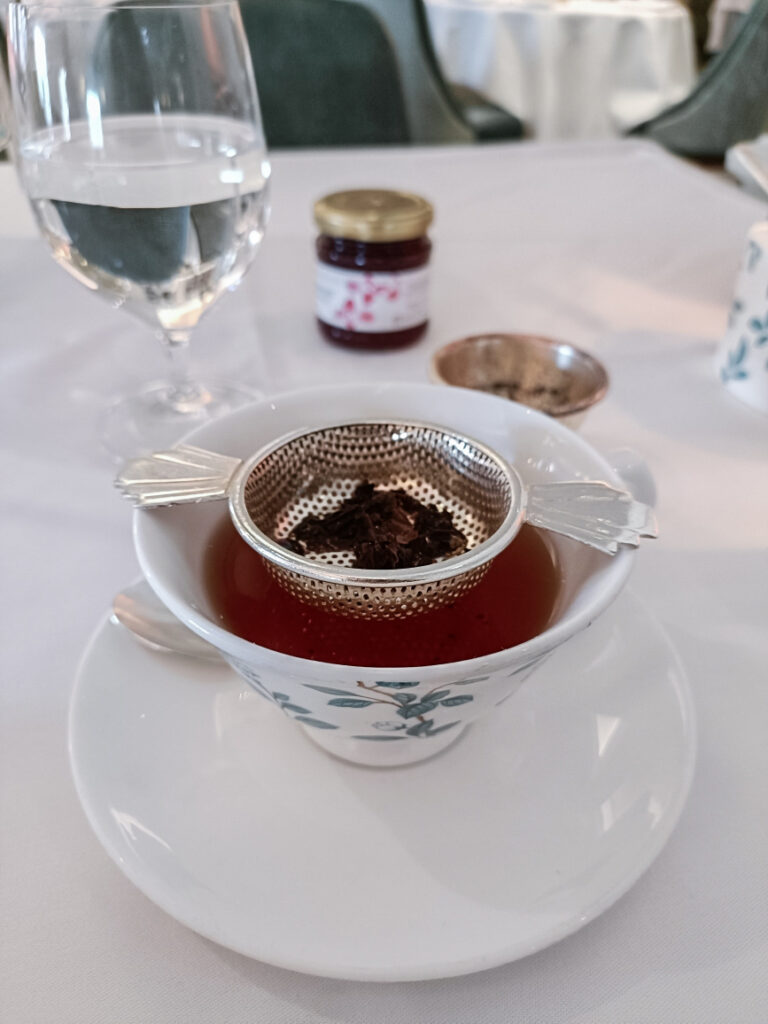

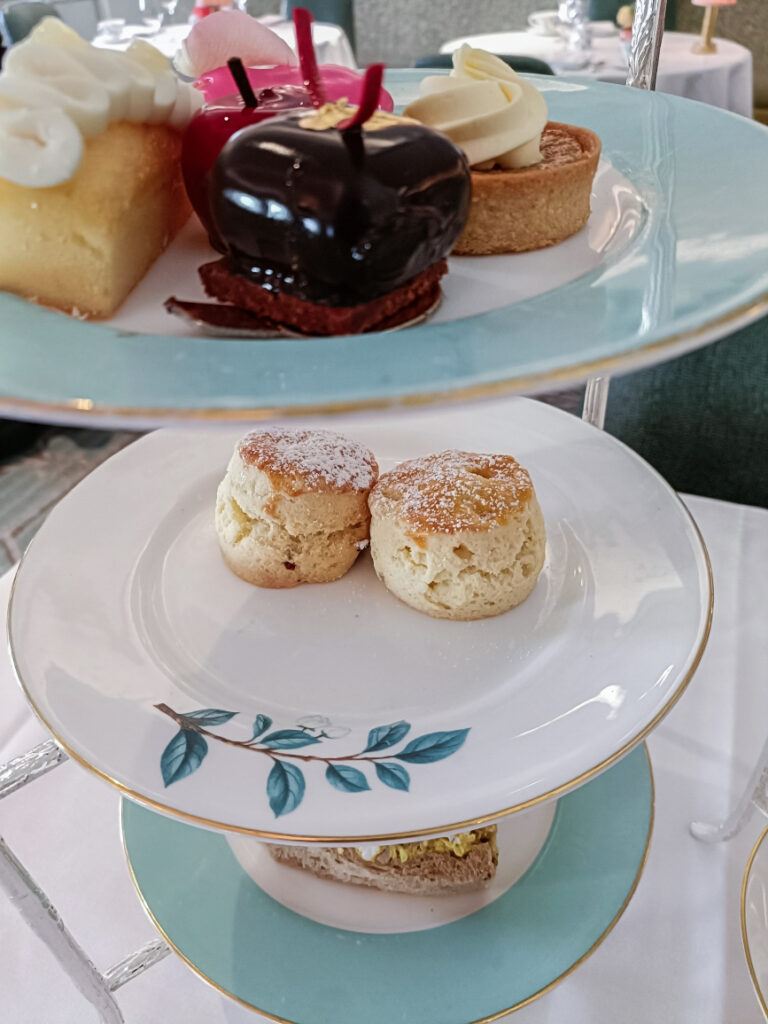


We are moving on to my favorite part of this guide to British food in London: all the sweets! My first afternoon tea in London was not my first ever afternoon tea. It was, however, the fanciest. I loved almost everything about it: the bottomless freshly-brewed tea, the teeny sandwiches, the exquisite over-the-top dessert, the elegant 3-tier platter, the fancy setting, the pretty china.
The only thing I didn’t appreciate was how expensive it was. The price range is from about £40 to £100 per person. For that, you get a selection of sandwiches (cucumber sandwich being the classic option), a choice of cakes and pastries, and scones served with cream and jam (my favorite part). Tea should be freshly brewed, of course. There’s a question of whether you want to have your tea with milk, and, if so, should milk be added to the cup first or last. (I say last.)
If you would like to read more on the history of afternoon tea, the British museum has an article “The tea-rific history of Victorian afternoon tea” by a food historian Tasha Marks, that I found fascinating.
There’s a rather long list of great places to try afternoon tea in London, but Fortnum & Mason tops each one of them. To start with, the company has a centuries-long history of selling tea. The Diamond Jubilee Tea Salon, located on the 4th floor of this luxurious department store, was opened in 2012 by Queen Elizabeth II herself. And their afternoon tea was named the best by Time Out magazine in 2025.
My experience here was wonderful, but one teeny-tiny detail (more on that later). The tea menu was extensive and the waiter experienced in recommending the tea that would suit my taste best. I loved the service — which is usually my pain point in Europe. They even have tearistas who will conduct a tea tasting (for a little extra fee) at your table. Scones served with strawberry jam and clotted cream like I never tasted before — dense and rich — were the highlight of the whole meal.
The space is beautiful, a pianist is playing live in the lobby, the tables are covered with crisp white tablecloths, which is where my teeny-tiny problem lies. The tablecloths were creased. Not crinkled. They were obviously ironed, then folded, then laid on the table with the creases from folding still there. Call me spoiled, unreasonable, too demanding, but I strongly believe if I pay £100 for a meal for one (!), every little detail better be taken care of. I would, of course, still highly recommend the afternoon tea experience here.
The Diamond Jubilee Tea Salon at Fortnum & Mason — 4th Floor, Fortnum & Mason, 181 Piccadilly


Remember when we talked about the Sunday roast? The dessert served afterwards is usually sticky toffee pudding. Not that you have to necessarily eat one after the other. I, for one, randomly walked into a pub in the afternoon to try the pudding. No meal, no beer, just dessert. Free will and all, right?
Sticky toffee pudding is a dense sponge cake made with dates. It comes covered with thick toffee sauce that is poured over the sponge, pooling at the bottom. Cream or ice cream are served alongside the cake. The origins of the dessert are not clear. Most popular version states that it was invented at Sharrow Bay Country House Hotel in England’s Cumbria county in the 1970s, so the dessert is relatively young. I loved reading this piece on the history and cultural significance of sticky toffee pudding, if you want a deep dive.
This sticky toffee pudding is haunting me. I think about it often. I would go back to London in a heartbeat, for this pudding alone. The sponge is dense and moist. The sticky toffee sauce is rich and sweet, but the kind of sweetness that comes from dark sugars, like Muscovado. It’s deep and slightly smokey. It is topped with Cornish clotted cream that, upon arrival of the plate in front of me, I mistook for ice cream. It was a pleasant surprise to spoon the cream and realize it was dense, silky, and almost butter-like in texture. Heaven!
The George — 55 Great Portland Street


One of the most popular cakes in Britain is a simple, no-frills affair: two layers of sponge cake sandwiched with jam (usually strawberry or raspberry) and cream. The cake, unsurprisingly, is named after Queen Victoria, who ate a Victoria Sponge slice at tea time every day (so they say). There are also speculations that Victoria sponge cake was originally intended as a cake for children. Many cakes at the time contained seeds and fruits that were deemed unsuitable for kids, so a plain Victoria sponge cake was served instead.
It is hard to believe, but Victoria sponge cake is not at all easy to find in London! It is sometimes served as part of an afternoon tea, but you would have to check the menu of your chosen location. Some bakeries make it occasionally, but none is specifically known for their Victoria sponge cake.
I tried it at Reemies Cakes in Chelsea. They make a mini version of the cake: it is the size of a cupcake, but with the original structure of two layers of sponge with cream and jam in the middle preserved. While the presentation is new, the taste is very much classic Victoria sponge, no frills. I stopped by at Reemies after a filling lunch and planned only to have a bite of the cake, but ended up devouring the whole thing.
Reemies Cake — 137 Fulham Rd.


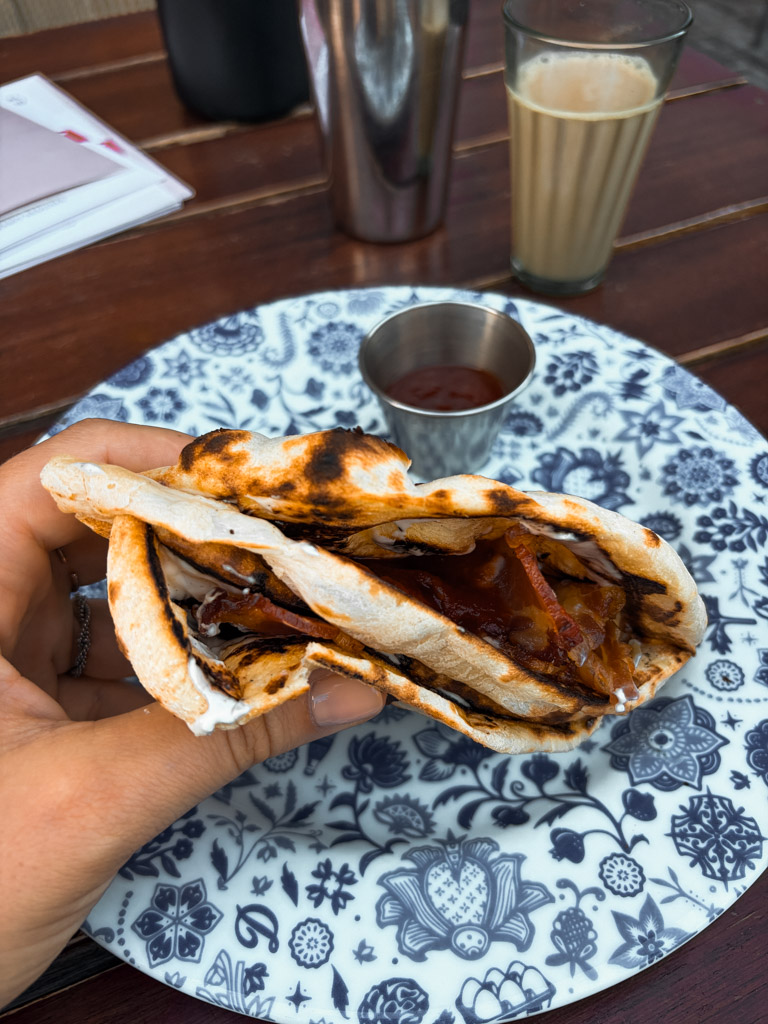
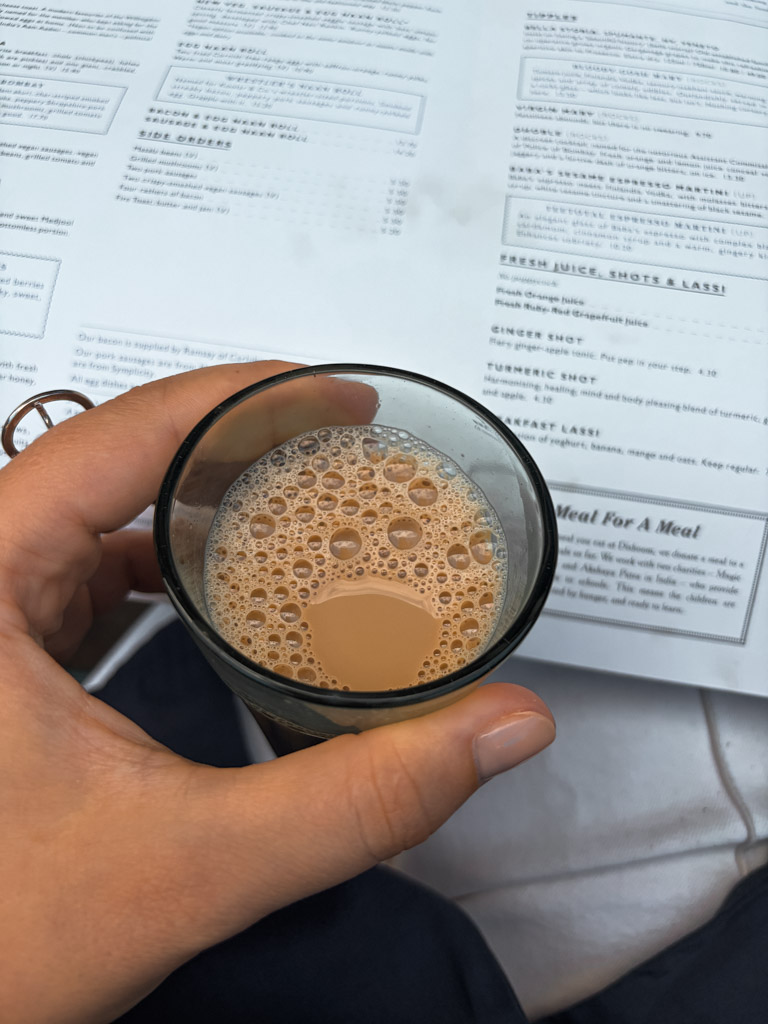
Many lists of the best British food in London have one item that is anything but traditionally British: Indian food. The reason it is so often included on the lists is because Indian food is a big part of London’s culinary history. Chicken tikka masala, in particular, is a good example of an Indian-British cuisine.
In 2001, Robin Cook, the foreign secretary, famously said in his speech, that
“Chicken Tikka Massala is now a true British national dish, not only because it is the most popular, but because it is a perfect illustration of the way Britain absorbs and adapts external influences. Chicken Tikka is an Indian dish. The Massala sauce was added to satisfy the desire of British people to have their meat served in gravy.”
But why not think broader and include cuisines from other countries on the list of foods to try in London? The city has become home to immigrants from pretty much every corner of the world. London’s Chinatown is a culinary and cultural destination. Sri Lankan hoppers were named one of the most iconic foods to try in London by CN Traveller. Maybe these are not traditional British foods to try in London, but they are a must if you want to understand British history and culture.
For Indian cuisine, try Dishoom. For Sri Lankan cuisine, go to Hoppers, Rambutan in Borough Market, or Kolamba. For Thai food, try Speedboat in Notting Hill. For Chinese bao buns, try Bun House in Chinatown.
One of the most classic London dishes that I didn’t get to try is pie and mash, and the most popular spot to have it is M.Manze Tower Bridge, which has been around since 1902.
For steak and kidney pie, I would go to Rules, the oldest restaurant in London. Their whole menu is based on traditional British cuisine, so you can’t go wrong with any dish here.
For Beef Wellington I would go to the Grenadier Pub.
For tea — whether you want to taste freshly brewed tea varieties or buy a pack — I would visit Twinnings at 216 Strand.


I spend lots of time researching and writing posts on this blog. If you use my tips, do leave a comment below! It makes me so happy to know my blog was useful. And if you would like to further support my work, you can book your hotel or attraction tickets (in London or anywhere else) using my affiliate links. You will NOT pay anything extra and I will earn a small commission. This is how I keep this blog running 10 years and counting!
One day in London: a Step-by-Step Itinerary


I write stories about food, travel, and my life as a mom of two boys. Home is Russia, but somehow also Sri Lanka and Hamburg, Germany. Go figure.
@2025 That’s What She Had - Food and Travel Blog | Privacy Policy | Terms and Conditions
Designed by wpauthors.com